۱۳۹۷ مهر ۱۱, چهارشنبه

Iran’s regime fears PMOI/MEK connection to ongoing strikes/protests

Oct 2-Truck drivers in Jolfa, northern Iran continue their strike

The Iranian regime, terrified of the Iranian opposition People's Mojahedin Organization of Iran (PMOI/MEK) linking with the ongoing protests and strikes across the country, is resorting to deceptive and oppressive measures against Iran’s protesters.
“Truckers must know that the [social media] channels that distribute these calls for protests and strikes are linked to the [PMOI/MEK] and the anti-revolution fronts. They have provoked a few people on Telegram and other social media networks, to throw rocks and place road blocks, disrupting the truckers’ activities and even scaring them,” said the political deputy of Khorasan Razavi Province in northeast Iran.
Sadegh Amoli Larijani, head of the Iranian regime’s so-called judiciary, also expressed concerns in this regard. His viewpoints are considered those of Supreme Leader Ali Khamenei.
“The enemy may be able to literally hire a few people to take advantage of popular demands and divert some protests. We must be aware and take timely and urgent action to resolve the problems and prevent the enemy from riding these waves. The truckers’ demands have nothing to do with road security and destroying vehicles. Such measures show that other currents are seeking to take advantage of popular demands,” he explained.
Mohseni Ejei, spokesman of the regime’s judiciary, went one step further and resorted to threats.
“Those who are currently providing services in the road and transportation field are people who unfortunately are provoked by the enemy and disrupting the transportation order. Those people resorting to such measures, especially those who threaten the truckers and at times place roadblocks before them, will be severely punished. All public prosecutors have been instructed to not show any tolerance in arresting these people. They should be punished immediately,” he said.
With the truckers continuing and expanding their protests and strikes, the Iranian regime is also showing signs of giving in to their demands.
“$200 million in September was spent to provide tires for the truckers. Arrangements are made to spend another $80 million each month,” said Mohammad Shariatmadari, the Iranian regime’s industry minister. He is known among the Iranian people as a shameless liar. 
Read more:
The truck drivers’ nationwide strike in Iran entered its 9th consecutive day on Monday, spreading to new cities and the four corners of the country. Despite the fact that Iranian regime authorities arrested over 120 of the protesting drivers, parallel to the mullahs’ judiciary authorities and the Revolutionary Guards (IRGC) resorting to voicing verbal threats, the drivers are courageously continuing their strike and paying no attention to the regime’s threatening measures.
The nationwide strike of the truckers, entering its second week, is intensifying the crisis inside the clerical regime whose leaders are increasingly horrified from its continuation and spread. In this regard, Iranian regime attorney general Mohammad Jafar Montazeri is now threatening to execute the strikers.
"According to the information we have, in some routes, some of the cities, there are elements who are provoking some of the truckers, or possibly blocking them and creating problems for them. They are subject to the rules and regulations of banditry and the punishment of the bandits according to the law is very severe, sometimes resulting in the death penalty,” he said on September 29th as cited by Iranian regime state media.
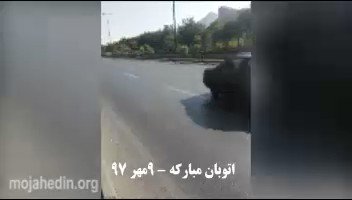
Oct 1
Thousands of truck drivers in over 250 cities across all of the country's 31 provinces are continuing their courageous strike.

Arak - Yazd - Najaf Abad - Shahr-e Kord - Fouldadshahr - East Azerbaijan Province - Karaj - Rezvanshahr - Mobarakeh - Bukan

At the same time, Ali al-Qasimehr, the chief justice of the Fars Province, accused the strikers of "corruption on earth," and IRGC Brigadier General Mohammad Sharafi, one of the commanders of State Security Forces, threatened the protesters with harsh action.
However, two days earlier, the Fars Province Transportation Director General had called the strike of truck drivers as rumors.
"It's been a few days that rumors about truck drivers’ strike have been circulating in the media and cyberspace. This misuse of the opponents from the needs of the truck drivers to create crisis in the country is clear for every Iranian,” he sais, as reported by the IRGC-affiliated Fars news agency.
IRGC Colonel Kavos Mohammadi, a deputy of the Fars provincial police force, described the strikers as "disrupters of the order."
"Following the disrupting acts of some of these people on the roads of Fars ... After the visible and invisible patrol of officers, 22 thugs and disrupters of public order on the roads were arrested and, after filing a case, they were sent to the judiciary authorities and through them to the prisons. Police will deal with sensitivity and vigilance with the smallest insecurity factors in coordination with the judiciary, and the process of confronting with the disrupters of order and security of the roads and axes of Fars province will continue on a daily basis. The police monitor and control all the roads in this province, visibly and invisibly, and resolutely deal with all elements of disrupters of order and security in these areas," he explained to the regime’s official IRNA news agency.
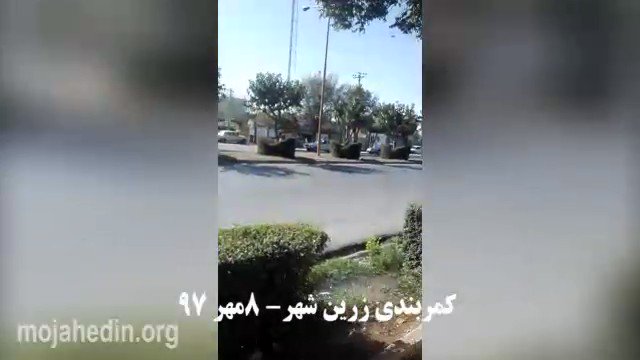
Sep 30
Thousands of truck drivers in over 250 cities throughout all of the country's 31 provinces are continuing their strike.

Zarrinshahr - Dorud - Zanjan - Sari - Pir Bakaran - Shiraz - Kermanshah

Mrs. Maryam Rajavi, President-elect of the Iranian Resistance, saluted the strikers throughout Iran, describing the vindictive threats of the clerics against the dignified and hardworking drivers as a reflection of the growing crisis of the clerical regime, and said that the ruling mullahs were the biggest thieves in the history of Iran, and that they neither want nor can respond to legitimate demands of striking drivers.
She called on all human rights organizations to take action to release the arrested and urged the general public, especially the youth, to support the strikers. She added that realization of these demands is only possible with the establishment of democracy and people's sovereignty. A regime that threatens to execute its working people due to a strike must be rejected by the international community.

France response was necessary to deal with the MOIS terrorist acts of extreme gravity

Secretariat of the National Council of Resistance of Iran

Reacting to the October 2 joint statement by France’s interior, foreign and economy ministers, the NCRI President-elect Maryam Rajavi called it “an appropriate and necessary response” to the terrorist acts of “extreme gravity” by the Iranian regime’s Ministry of Intelligence (MOIS) on the French soil.
“Behind all this was a long, meticulous and detailed investigation by our (intelligence) services that enabled us to reach the conclusion, without any doubt, that responsibility fell on the intelligence ministry,” a French diplomatic source told Reuters, adding that deputy minister and director general of intelligence Saeid Hashemi Moghadam had ordered the attack.
This foils the efforts by the mullahs and their agents to portray this act of terrorism as an arbitrary measure by fictitious factions within the regime in a bid to whitewash the hands of Khamenei, Rouhani, and Zarif in this regard. It is no longer possible for Rouhani and Zarif to attribute the bombing to its victims as if they were not responsible for the state-sponsored terrorism and were not part of the religious fascist regime in Tehran.
The Security and Anti-terrorism Committee of the National Council of Resistance of Iran declared on July 11, 2018, “The decision for this terrorist action had been made months ago by the mullahs’ Supreme Leader (Ali Khamenei), the regime’s president (Hassan Rouhani), its ministers of Foreign Affairs (Javad Zarif) and Intelligence, the secretary of the Supreme Security Council, IRGC commanders, the Quds Force, the IRGC Counter-Intelligence and the security-political deputy of Khamenei’s office; the Ministry of Intelligence was tasked to execute the plan.”
Since three decades ago, the Iranian Resistance has been insisting that the Iranian regime relies on domestic suppression, export of terrorism abroad, and warmongering to guarantee its survival, and is not able to continue its rule without them. All of the regime’s factions are involved in suppression at home, terrorism abroad, and the regime’s missile projects and warmongering efforts.
Had the 29 April 1997 declaration of the European Union been implemented against the Iranian regime’s terrorism contrary to the policy of appeasement, the MOIS would not have dared to attempt bombing of the gathering of Iranians in Paris, since the 5-point declaration called for exclusion of Iranian intelligence personnel from European Union Member States, cooperation to ensure that visas are not granted to Iranians with intelligence and security functions, and suspension of official bilateral Ministerial visits.
The bomb carried by the terrorist diplomat of Javad Zarif’s Foreign Ministry was made with the same explosives used in the ISIS terrorist attacks in France and Belgium. The Sunni Islamic State and the Shiite Caliphate of the mullahs (velayat-e faqih) are acting in parallel under the banner of Islam.
In the wake of the Iranian people’s uprising in December-January, the clerical regime has found its only way out in stepping up its terrorist activities. The regime’s ill-fated attack on the MEK gathering in Albania in March 2018, its aborted terrorist plot against the Iranians’ gathering in Paris in June 2018, and the arrests in August 2018 of two MOIS agents in the US who were preparing for terrorist operations against the MEK are among such measures.
To prevent the Iranian regime’s terrorism in European countries, the EU declaration of April 29, 1997, must be enforced in dealing with the MOIS intelligence personnel and agents.
  • the suspension of official bilateral Ministerial visits to or from Iran under the present circumstances;
  • confirmation of the established policy of European Union Member States not to supply arms to Iran;
  • cooperation to ensure that visas are not granted to Iranians with intelligence and security functions;
  • concertation in excluding Iranian intelligence personnel from European Union Member States

۱۳۹۷ مهر ۹, دوشنبه

Iran: PMOI/MEK resistance units calling for more anti-regime measures

The year of uprisings with Resistance Units expanding in schools, universities

Resistance units affiliated to the Iranian opposition People's Mojahedin Organization of Iran (PMOI/MEK) are expanding their activities against the Iranian regime, especially marking the beginning of the new school year and pledging to continue their efforts to realize regime change in Iran.

The year of uprisings with Resistance Units expanding in schools, universities

Iranian opposition President Maryam Rajavi hailed the youth across Iran on this occasion and sent a message of encouragement.
"Fellow students, the vanguard generation creating the uprisings,
Honorable teachers and university professors,
I salute all of you in the beginning of the new academic year, and commend you for your desire and determination in achieving Iran’s freedom and progress, and in bringing up a generation that yearns for the establishment of a society based on freedom, democracy and equality.
On the eve of September 27, let us remember and pay tribute to the generation of Iranian youths who created a glorious battle on this day in 1981. Let us remember Abdollah Safa, Soudabeh Pazak, Fereydoon Bakhshi and Afsaneh Shamsabadi whose names will shine for ever in the history of resistance for freedom. On that day, they sacrificed their lives to socialize the mantra of “death to Khomeini.” Hail to those shining stars of the sky of Iranian revolt for freedom.
The opening of schools and universities is particularly important this year as it is entwined with the uprisings and the protest movement.
The uprisings in 142 cities last December-January, the uprisings in at least 27 cities in August, and the major uprisings in Tehran, Kazerun, Ahvaz, Khorramshahr, and Borazjan bear a significant message. These uprisings say that more than any other time, the best and most important lesson for Iran’s youth is freedom; the first lesson is the lesson of freedom.
The second lesson is sacrificing for freedom. 120,000 of Iran’s valiant children have given their lives in the struggle against the clerical regime, including the 30,000 political prisoners massacred in 1988, as well as dozens of martyrs and thousands of young souls who were arrested this year during the uprisings. This is the price the younger generations of Iranians have paid and will continue to pay for freedom.

And the third lesson is unity and solidarity for freedom which culminates in the formation of resistance units and councils, and advances the uprisings and the protest movement.
Today, Iran’s students as well as the education and university communities are fed up with the retarded state of schools and universities and the drastic state of economy and society.
Every year, a greater number of children and youths are left out of schools, becoming victims of barbaric exploitation. It is estimated that the number of child workers in Iran has reached 7 million.
The growing number of students, particularly girl children, leaving schools and universities pervaded by suppression, has crippled and rendered the country’s education inefficient. An estimated 25million Iranians are purely or functionally illiterate.
On the other hand, the mushrooming of universities, their plummeting quality of scientific level, and the unemployment of at least two thirds of university graduates, have made higher education a failure.
Iran’s younger generations wonder why has the country’s educational system collapsed?
What is the business of so many spies and suppressive mercenaries in universities?
Why are Iran’s honorable teachers and high school instructors so much discriminated against and suppressed? Why are the majority of them living under the poverty line?
Why are students, teachers, and professors totally stripped of their right to participate in the administration of affairs in schools and universities?
Why are they deprived of forming their associations, freedom of expression, and assemblies?
An advanced and democratic educational system can be achieved only after the overthrow of the velayat-e faqih regime (absolute clerical rule). Iranian teachers’ demands for freedom and justice, formation of their associations, end to imprisonment and exile of their colleagues, and alleviation of poverty and discrimination, all depend on bringing down the mullahs’ religious tyranny.
The right solution lies in the hands of the democratic alternative to this regime, the National Council of Resistance of Iran (NCRI). The solution lies in the hands of a generation risen in this path demanding the regime’s overthrow. As the Iranian Resistance’s Leader Massoud Rajavi has said, “The days of Khomeini’s heirs and the brutal mullahs are numbered. The dawn of freedom and justice is on the horizon.”
Fellow high school and college students,
The opening of schools and universities injects fresh force to the uprisings and the protest movement and it can besiege the mullahs’ rotten regime.
Rise up to continue the uprisings and to free your homeland occupied by the mullahs. This is what you owe to your oppressed and deprived countrymen and women and especially to the children who have been victimized by this regime.
Expand the resistance units to all schools and universities.
Turn every school and college into a resistance unit and every Iranian city into a risen and revolting city.
Freedom and victory are in your hands!
A member of a resistance unit in Sari, northern Iran, put up a poster also praising this message.
In Shiraz, south-central Iran, members of Resistance Unit 994 installed a banner portraying a number of PMOI/MEK martyrs, hailing their bravery.
Members of a resistance unit in Ahvaz, southwest Iran, put up posters of more PMOI/MEK martyrs in various parks across this city.
In Tehran, members of the “Hanif Kafaie” Resistance Unit also pledged their allegiance to the ongoing struggle against the mullahs’ regime.
In a courageous act, members of Resistance Unit 555 in Karaj, west of Tehran, set fire to a banner portraying regime Supreme Leader Ali Khamenei.
In East Azerbaijan Province, in northwest Iran, members of a resistance unit put up posters expressing their support for the nationwide Iranian uprising.
In Mashhad, northeast Iran, members of a resistance unit put up posters calling on Iran’s youth to establish and launch more resistance units.
Resitance unit members in Shushtar took to graffiti and wrote, “The first lesson is to protest for freedom.”
Members of a resistance unit in Qom, central Iran, put up a poster written, “Death to Khamenei; Hail to Rajavi.”
In Rasht, northern Iran, a banner reading “Hail to Rajavi; Death to Khomeini” was put up by members of a resistance unit inside a mosque. This is a very brave measure considering the fact that Iranian regime authorities have full security control over mosques and consider these sites as their bastions.
Members of a resistance unit in Zanjan containing images and segments of Mrs. Rajavi’s message on the beginning of the school year.

Iran mullahs threaten striking truck drivers with execution, arresting dozens of drivers

The Secretariat of the National Council of Resistance of Iran

The nationwide strike of the truckers, which has entered its second week, has intensified the crisis inside the clerical regime whose leaders have been horrified from its continuation and spread. In this regard, Khamenei sent Chief Prosecutor General Montazeri to the scene to threaten the strikers to execution. Montazeri said: "According to the information we have, in some routes, some of the cities, there are elements who are provoking some of the truckers, or possibly blocking them and creating  problems for them. They are subject to the rules and regulations of banditry and the punishment of the bandits according to the law is very severe, sometimes resulting in the death penalty. "(News Network TV News – September 29).
At the same time, Ali al-Qasimehr, the chief justice of the Fars province, accused the strikers of "corruption on earth," and IRGC Brigadier General Mohammad Sharafi, one of the commanders of State Security Forces, threatens the protesters with harsh action. (State TV - September 29).
However, two days earlier, the Fars Province Transportation Director General had called the strike of truck drivers as rumors and said: "It's been a few days that rumors about truck drivers’ strike have been circulating in the media and cyberspace. This misuse of the opponents from the needs of the truck drivers to create crisis in the country is clear for every Iranian (FARS, Islamic Revolutionary Guard Corps news agency, September 27).
IRGC Colonel Kavos Mohammadi, a deputy of the Fars provincial police force, described the strikers as "disrupters of the order," and said: "Following the disrupting acts of some of these people on the roads of Fars ... After the visible and invisible patrol of officers, 22 thugs and disrupters of public order on the roads were arrested and, after filing a case, they were sent to the judiciary authorities and through them to the prisons. Police will deal with sensitivity and vigilance with the smallest insecurity factors in coordination with the judiciary, and the process of confronting with the disrupters of order and security of the roads and axes of Fars province will continue on a daily basis. The police monitor and control all the roads in this province, visibly and invisibly, and resolutely deal with all elements of disrupters of order and security in these areas "(IRNA news agency - September 26).
Mrs. Maryam Rajavi, President-elect of the Iranian Resistance, saluted the strikers throughout Iran, describing the vindictive threats of the clerics against the dignified and hardworking drivers as a reflection of the growing crisis of the clerical regime, and said that the ruling mullahs were the biggest bandits in the history of Iran, and that they neither want nor can respond to legitimate demands of striking drivers. She called on all human rights organizations to take action to release the arrested and urged the general public, especially the youth, to support the strikers. She added that realization of these demands is only possible with the establishment of democracy and people's sovereignty. A regime that threatens to execute its working people due to a strike must be rejected by the international community.

Iran: People from all walks of life voicing support for truckers’ nationwide strike

Iran – Fars Province – Truckers on strike (File Photo)

Iran, September 30, 2018 - On the second week of the nationwide strike that has spread to over 250 cities in all of the country’s 31 provinces, people from various branches of society are expressing their support for the truckers’ continuing protests.

Statement by a group of bazaar merchants in Tehran

A group of bazaar merchants in Tehran issued a statement backing the truck drivers’ protests and ongoing strike.
“Unfortunately, the mullahs’ regime has brought the country’s economy so such a state of bankruptcy (embezzlement – theft – plundering – oppression of defenseless who hate this regime) that the state is truly becoming paralyzed. Proof is seen in the daily increasing prices of basic goods and essentials… We support your nationwide strike in a comprehensive manner.
“Hail to the People's Mojahedin Organization of Iran (PMOI/MEK) - Death to Khamenei”

Kermanshah Bazaar merchants express solidarity with truck drives strike

Bazaar merchants in Kermanshah also voiced their support for the protesting truckers.
“At a time when this reactionary regime is determined to push the country into utter destruction, it is the duty any and all patriotic Iranians to support and back this protest and strike… We consider it our duty to sacrifice ourselves in the path for freedom… We are steadfast on our demands, seeking freedom and the complete destructions of this bloodthirsty regime.”

Bushehr University
Bushehr University
Bushehr University students in southern Iran issued a statement saying, “These strikes are not only our classroom for a new revolution, but also a very effective and necessary weapon… The truckers’ strike results in the regime becoming paralyzed and tensions are spreading throughout their entire apparatus. The role of strikes in revolutions throughout the world’s history is undeniable. Therefore, we call on all the Iranian people to join the truckers’ strike and we call on the PMOI/MEK to also support this strike and back us in the struggle to overthrow the mullahs’ regime.”

Unemployed youths in Khuzestan Province issued a call asking all Iranians to join this strikeand pursue broader objectives, and emphasizing on the necessity to broaden and organize this protest movement against the mullahs’ regime.
“We call on the Iranian people to refer to texts published by the PMOI/MEK on how to resolve the problems we face in organizing our protests and understanding the importance of having a strategy regarding the ongoing strikes. We call on the PMOI/MEK to support us in this movement launched by the Iranian people.”


Read more:
Saturday marks the seventh consecutive day truck drivers across Iran have been on strike, reaching nearly 250 cities across all of the country’s 31 provinces.


Truckers in the cities of Tabriz, Bukan, Isfahan, Zarrinshahr, Tehran, Firouzkuh, Eslamshahr, Mashhad, Shahr-e Kord, Qazvin, Sirjan, Golgohar, Rasht, Khorramabad, Borujerd, Neka, Mahallat, Bandar Abbas, Hamedan, Assad Abad, Maybad, Yazd and Ardokan were scenes of continued strikes parallel to dozens of other cities.

Iranian regime officials, authorities and elements and various cities have ridiculously and desperately resorted to issue threats and making bogus offers. However, the drivers are quite aware of this regime’s nature and deceptiveness, continuing their strike despite these devious measures.

Reports indicate authorities have arrested over 70 truck drivers in the provinces of Qazvin, Fars, Isfahan and also the town of Pakdasht, located southeast of Tehran.
Some numbers show more than 80 drivers were arrested.
15 of the striking truck drivers were arrested on Thursday, the fifth day of truck drivers’ nationwide strike which has spread to over 220 cities across Iran, according to Ismaeel Sadeghi Niaraki, the regime’s prosecutor in Qazvin Province (northwest Iran). These drivers “blocked roads with their trucks and disrupted commuting inroads inside the province,” he claimed.

“Action has been taken against any individual who disrupts people’s lives and we will not allow people seeking their own interests to block roads and prevent general commuting, disrupting people’s lives,” he said in his threats during an interview with the state-run Mehr news agency, known to be affiliated to the Iranian regime’s Ministry of Intelligence and Security (MOIS).
“Individuals who disrupt people’s lives by blocking truck commuting in our roads and damage people’s lives will be facing firm action,” this official of the mullahs’ so-called judiciary said.


Truckers expanding the nationwide strike
The hardworking truck drivers of Iran continued their strike for the fifth consecutive day.
On Wednesday the truckers of Rafsanjan and Shahr-e Parandak (Markazi Province) also joined the massive strike spreading throughout the country.
Reports indicate people from other walks of life are also joining this ever-growing protest movement.
On Thursday, bus drivers in Dezful, southwest Iran, declared their solidarity with the truck drivers and went on strike.
On Wednesday, vehicles transferring fruits from nearby towns to the city of Zahedan, the provincial capital of Sistan & Baluchistan Province in southeast Iran, emptied their loads in the city’s Sarallah Boulevard and joined this strike.
Bus passenger companies such as Iran Peyma, Hamsafar, TBT and Royal Safar in Ahvaz, Abadan, Khorramshahr, Mahshahr, Izzeh and other cities of Khuzestan Province closed their ticket selling offices and branches in solidarity with the truck drivers’ protests.
A number of transportation companies have also closed down in solidarity with the truckers’ nationwide strike.
Truck drivers in the city of Sirjan blocked a road on drivers who loaded goods despite the strike spreading throughout the country.
In Zahedan, fruit trucks emptied their loads in the city’s Sarallah Boulevard and joined this strike. They have also announced their support for the truck drivers.
A group of shop owners in Tehran-bazaar issued a statement in support of the truck drivers’ strike.

Egypt wise to freeze relations with Tehran: Maryam Rajavi

FILE - Iranian resistance leader Maryam Rajavi

CAIRO – 28 April 2018: After the latest Iranian protests that broke out in December 2017, and continued for several months during 2018, it became obvious that Tehran’s mullah-led regime is facing serious troubles that need to be reconsidered. The Iranian authorities, however, accused several powers of standing behind these protests, including the Iranian resistance and its leader, Maryam Rajavi. 

“Egypt was right and wise by deciding to freeze all diplomatic relations with Iran’s mullah regime. The decision protected the whole Middle East region’s interests,” Rajavi said in an interview with Egypt Today. 

Rajavi, a prominent leader of the People's Mujahedin of Iran political resistance movement, explained in her statements the reasons that led to the outbreak of protests against the regime. She said that the protests were the natural result of Iranians’ growing public rage for several reasons. 

“The country was suffering from a high unemployment rate, which is currently up to 40 percent. About 20 million people live in urban slums, one-third of the Iranians are suffering from the lack of food and water,” Rajavi said, adding that all of these crises came along with the political suppression that banned anyone from expressing their opinions. 

From Rajavi’s point of view, the People's Mujahedin of Iran played a crucial role in the Iranian protests that even the current regime could not deny. 

However, accusations that the People's Mujahedin of Iran is backed by other governments or courtiers was vehemently denounced by Rajavi. 

Restoring and maintaining good relations with the rest of the Arab world is going to be one of the major targets for the Iranian resistance, in case they succeed in toppling the current extremist regime, according to Rajavi’s statements. 

“The dictatorship of Iran’s current mullah regime destroyed several countries and is still trying to topple others, including Syria, Iraq, Yemen and Lebanon. If the current regime doesn’t stop, they will destroy the rest of the Arab and African countries,” Rajavi said, explaining that Iran will drag all governments into war. 

According to the Iranian resistance leader, who is currently based in France, the people of Iran recognized that “exporting terrorism and war” was part of the Iranian regime’s plan to ensure their survival in power. 

“Supporting the continuation of these wars demanded the Iranian leaders to support it financially with a huge part of the country’s income; at the same time they were suffering from famine,” Rajavi told Egypt Today, affirming that this was one of the reasons that led to the demonstrations. 

According to Rajavi, the high military cost of backing wars in other countries upset the people, who were already suffering from the lack of everything they need. 

In December 2017, many Iranians demonstrated against Iran’s supreme leader Ayatollah Ali Khamenei, and the current regime, due to several political and social reasons. The demonstrations, which took place in various cities throughout the country, demanded the toppling of the regime, however the authorities succeeded in maintaining control. 

In her statements to Egypt Today, Rajavi expected that the demonstrations could rise again and continue in the country at any moment, as Iranian society still has many strong reasons to continue its protests.