‏نمایش پست‌ها با برچسب MEK. نمایش همه پست‌ها

۱۳۹۷ مهر ۳۰, دوشنبه

THE MEK OPPOSES THE IRANIAN REGIME’S NUCLEAR PROGRAMME


INU- It is hard to believe now, but until 2002 the Iranian Regime’s malign nuclear weapons programme remained a secret to the rest of the world and, if not for the brave work of the National Council of Resistance of Iran (NCRI) and the People's Mojahedin Organization of Iran (PMOI/MEK), we might never have known until it was too late.
The MEK provided concrete evidence about the Regime’s nuclear programme, including a uranium enrichment facility at Natanz and a Heavy Water plant at Arak, to the NCRI, which spurred a press conference that garnered worldwide attention.
The MEK’s revelations led to an investigation by the International Atomic Energy Agency (IAEA) who brought the Iranian Regime's nuclear file before the United Nations’ Security Council for punitive sanctions.
Of course, this wasn't the first time that the MEK and the NCRI had revealed information about the Iranian Regime’s nuclear weapons programme – they did so all the way back in 1991 – but this is the first time that anyone acted upon this information.
Since 2002, the MEK has provided much more information about the Iranian Regime’s covert nuclear weapons programme and the key personnel involved in the malign work. This has led to dozens of press conferences in Western capitals. Here are just some of the things that the MEK have helped to expose over the years:
• 2003: information about an enrichment project taking place at the Lashgar-Abad site near Karaj
• 2004: details about a laser enrichment project, also at the Lashgar-Abad site
• 2004: the existence of a nuclear facility at Lavizan (called Lavizan II) and enrichment-related activity at the Parchin site
• 2008: news of a command and development centre for nuclear weapons at the Mojdeh site – this included various components, including laser enrichment
• 2010: details of a nuclear enrichment site at Abyek
• 2012: secret details of the role of the Islamic Revolutionary Guards’ Corps (IRGC) in the Iranian Regime's nuclear weapons projects
There has been much more information shared by the MEK since then about the Iranian Regime’s nuclear weapons programme and we can expect much more in the future, for as long as the Iranian Regime is in existence, they will be trying to obtain nuclear weapons, and the MEK will be there to expose them.
The MEK, like most Iranians, don’t want nuclear weapons in their country. Instead, they follow that 10-point plan for a Free Iran laid out by Maryam Rajavi, leader of the Iranian Resistance, which includes a commitment to a non-nuclear Iran.
It reads: "We want the free Iran of tomorrow to be devoid of nuclear weapons and weapons of mass destruction."
But why are the MEK and the Iranian people so opposed to the idea of nuclear weapons? Well, aside from their belief in peaceful coexistence with their neighbours, the MEK and the Iranian people resent that the Regime is spending billions of dollars every year on the development of nuclear weapons (and other weapons of mass destruction) while the Iranian people live in poverty.

۱۳۹۷ مهر ۲۴, سه‌شنبه

Washington Times Reveals The Iranian Regime’s Fake News Against The MEK


Privacy & Cookies: This site uses cookies. By continuing to use this website, you agree to their use. 
To find out more, including how to control cookies, see here: Cookie Policy


Washington Times reveals the Iranian regime’s fake news against the MEK
Over the past several weeks, agents and mercenaries of the clerical regime led a dirty campaign against the People’s Mojahedin Organization of Iran (PMOI/MEK) under the guise of reporters from Britain’s Channel 4 and Al-Jazeera English.
After running campaigns by Channel 4 (September 6) and Al-Jazeera English (September 16) to discredit the MEK on behest of the Iran regime, the regime’s Foreign Minister, Javad Zarif, and the regime’s Ambassador to the United Kingdom, Hamid Baeidinejad, called for the closure of the accounts of the supporters of the Iranian Resistance.
It is ironic that a representative of a regime which deprives 80 million Iranians of social networks, gives instructions to close down the internet accounts of its opposition – an act which reveals the regime’s fear of the growing popular unrest as the intensified international sanctions are looming.
In addition, it clearly shows that the disparaging campaigns broadcasted by Channel 4, and Al-Jazeera English were “ordered” by the mullahs’ regime.
One has to recall that recently, Facebook, Twitter, and Alphabet (Google’s parent company) found multiple social media accounts and websites that formed part of an Iranian campaign to covertly influence public opinion in favor of Iran across the world by sharing content from the Regime’s state-run media.
SO Their remarks are further proof that the fake news, aired via these programs were a vengeful repetition of the mullahs’ claims against the Iranian Resistance and aimed at diverting the attention from the regime’s cybercrimes and the closure of its fraudulent social media accounts. In 2002 and 2003, this regime claimed through hired mercenaries and journalists that Iraq’s weapons of mass destruction were hidden in the PMOI’s headquarters. The goal then was to divert attention from the Iranian Resistance’s revelations about the regime’s clandestine nuclear facilities.
The National Council of Resistance of Iran issued a statement and disclosed Al-Jazeera English, and the disgraced regime’s agents such as Trita Parsi, and his associate Azadeh Moaveni. The statement also reveals how on September 6, Channel 4, had secretly filmed the MEK residence and sent photos and videos to the regime’s intelligence agents.
MEKMr. L Todd Wood, the columnist of Washington Times and the Editor-in-Chief of Tsarism website, on a recent business trip to Albania visited the MEK’s new camp and wrote a report that reveals the fake news spread by the Iranian regime, which reads:
“In fact, I was given a tour of the camp. The facilities are very functional, if not somewhat barren. With the MEK children having been brought out of Iraq to Europe and America in the last decade, the remaining adult members are all mostly older, although I did meet scores of a new generation of MEK, male and female, some of whom were in the group of children who were evacuated from Iraq in 2009, only to join the MEK later in life. Many signed up in their relatives’ footsteps, to keep alive their struggle against the regime.”
In another part, Mr. L Todd Wood writes: “There has been much disinformation purposefully spread about the PMOI/MEK. I hope to confront most of it by writing from personal experience from my interactions with the Iranian resistance. This is the first of many reports on the subject.”

MEK, The Most Determining Factor Of The Iran Uprising

Activities of resistance units led by MEK to support of Mrs. Maryam Rajavi

Iran uprising; against the mullahs regime in its entirety

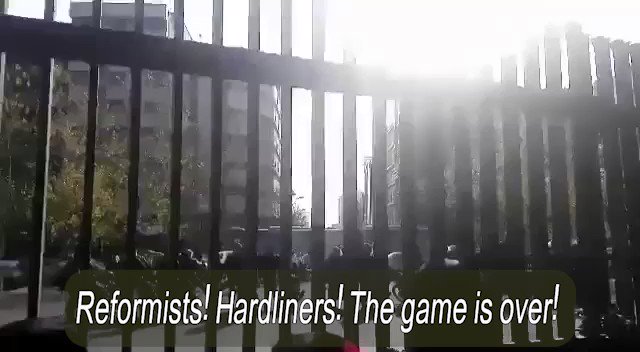
On the last days of 2017, while many people were waiting for Church bells to mark Christmas in various parts of the world, a new uprising sparked in the streets and alleys of the Iranian cities, which targeted the regime in its entirety, with people chanting:
“Reformists! Hardliners! The game is over!”
Noticeable those still hope 2 polished front men 4 the mullahs whose so-called reformists make a few changes in the most bloodthirsty dictatorship.
It is good 2 take a glance at what slogan students were chanting in front of Tehran University https://iranfreedom.org/en/2018/08/13/anti-government-protests-iran/ …

The uprising displays Iranians’ thirst for freedom

This uprising changed many of the political equations both inside Iran and at the international level. The world became aware of how the people of Iran long for freedom, justice, and equality. The Mullahs’ reaction to the uprising was that they resorted to their savage nature. They refused to respond to the legitimate demands of the people and instead began a new round of repression, by arresting thousands of the protesters, killing some in the streets by directly shooting at them or in the jails under torture.
Iran's regime is suppressing the Iranian uprising supported by MEK
Iran’s regime is suppressing the Iranian uprising supported by MEK

The cause of a continuous uprising;

Contrary to the former revolts, this uprising advances on the shoulders of the toilers. The economic pressures have left no other choice for the people. Repression and crime have no effect on stopping the uprising. The people are keen to seize any opportunity as the Funeral Ceremony of the Popular Movie Star, unacceptable provincial visioning, or suspension of farmers’ right to water to protest and rise.
There is, of course, another parameter. These uprisings are organized, the slogans and demands are similar and this stems from the force that leads the uprising.
Organized Resistance is the cause of continuous uprising in Iran

MEK; the vanguard of Iran’s uprising

But who is this crucial force?
On January 10, 2018, Khamenei admitted: “A triangle (of forces) have been involved in the recent events”; and he named the PMOI \ MEK as one side of this triangle.
As the uprising surged, on calling the French President, Emmanuel Macron on Jan. 2nd, Rouhani asked him to take action against the PMOI, who have their headquarters in Paris.
During recent months, there has not been a day in which the regime and its lobbies abroad did not demonize the MEK in their articles, books or videos.

MEK; the nullifying force of regime’s suppression

The regime sees its overthrow in the success of the uprising. Therefore the Mullahs, endeavor full force to rein in Iranians’ determination to achieve freedom. But there is a parameter that prevents the repression from stopping the uprising. An organization that has undermined regime’s suppressive ability by offering its 40 years of experience in the struggle for freedom to the young generation and by organizing protests inside Iran as well as reflecting the voice of the Iranian people’s craving for liberation abroad.
The continuation of the uprising, the nationwide strikes and the growing activities of the resistance units are the evidence of the debilitation of the regime’s suppressive power.

MEK; the subject of the regime’s terrorism

The mullahs have perceived that demonizing the MEK and disseminating fake news about them will have no effect, thus to restrain the uprising, they seek the solution in physically annihilating the MEK.
Of course, massacring the MEK is nothing new. Mullahs’ regime has murdered more than 120,000 freedom-lovers so far. The anti-human mullahs executed 30,000 political prisoners just within August-September 1988, most of them supporters of the MEK based of Khomeini’s fatwa. In his fatwa, Khomeini demanded immediate “destruction of the enemy”.
Khomeini's Fatwa to massacre 30000 political prisoners in 1988
Khomeini’s Fatwa to massacre 30000 political prisoners in 1988
Accordingly, all the regime’s agents were and are obliged to annihilate the enemies of the regime, the latest example of the implementation of this fatwa is the arrest of senior regime diplomat in Europe, who had personally delivered 500g of TATP to its mercenaries in Strasbourg. These mercenaries were supposed to bomb the Free Iran Gathering in Paris, while more than 100 thousand exiled Iranians, hundreds of the prominent figures from five continents of the world were present there to declare their support for Mrs. Maryam Rajavi and MEK as the main force of the Iranian resistance.
Iranian diplomat delivered 500gr TATP to terrorists for bombing Iranian opposition gathering
This terror conspiracy was, of course, foiled in its latest stages by Belgian security forces and European cooperation. Eventually, this so-called diplomat was arrested along with other mercenaries in Belgium, Germany, and France.
Merci à nos services de renseignement et de sécurité pour leur magnifique travail à .

Ils ont contribué à déjouer un attentat qui serait commis en France.

Une fois de plus la bonne collaboration entre pays partenaires européens porte ses fruits!

The end of moderate vs hardliner game

As Mrs. Maryam Rajavi has stated, the decisions for terrorist operations are made at the Supreme Council of National Security presided by Hassan Rouhani, and subsequently approved by Khamenei. Otherwise, regime’s senior diplomat could have never engaged directly in such a plot. Indeed this is not the first terror attack by the mullahs, for example, in the AMIA bombing case in Buenos Aires, the highest levels of the regime were involved.
The fingerprint of mullahs' regime on AMIA bombing case
The fingerprint of mullahs’ regime on the AMIA bombing case
It is notable that these terror conspiracies recently discovered and foiled in Albania, France, and the United States, have all been conducted during Rouhani’s tenure, a fact that those countries who still are appeasing this polished front men for their short-lasting benefit must have in mind.

Standing with the MEK: The only way to confront mullahs’ terrorist threats

No need to say that the regime’s oppressive apparatus and its MOIS continue physical removal of the MEK and their dissidents, what they have done from day one.
Regime’s agents and so-called diplomats are tasked with the annihilation of its opposition everywhere. Thus, it is shameful for the EU governments to close their eyes on mullahs’ crimes for some fleeting economic interests.
It is, therefore, the time for EU to stand firm against mullahs and their terrorist conspiracies. The EU must make the regime understand that it cannot turn Europe into a slaughterhouse for the MEK and its other dissidents.
While the state-sponsor of terrorism is approaching its end, the EU needs to take a firm step to prevent the Iranian regime from continuing its criminal plots.
Since the Iranian regime is providing the logistics and is covering up the terrorist operations through Iran’s embassies, the best decision would be to close down regime’s embassies in Europe as the first stage.

۱۳۹۷ شهریور ۲۰, سه‌شنبه

The MEK ’S ‘Great Exodus’ From Iraq, The Source Of Strategic Development


The first week of September recalls several important events in the history of the People’s Mojahedin Organization of Iran (PMOI/MEK), the main Iranian opposition group; the foundation of the organization, the election of the organization’s Secretary-General, and the departure of the last remaining groups of the MEK members from Camp Liberty in Iraq to Albania
But what has attracted the most domestic and international attention in the recent years is the relocation of the last group of the MEK members from Iraq to Albania, which is referred to as the “Great exodus”, and has been the source of significant developments in the political, social and strategic arenas of Iran which is now under the rule of the clerical regime.
 On September 10, 2016, the media reported that the last group of the MEK arrived in Albania from Iraq.
The National Liberation Army of Iran had successfully managed to transfer all its cadres and fighters who were surrounded by the Quds terrorist forces and its affiliated Iraqi mercenaries, in the course of a complicated operation via Baghdad international airport to Albania. The relocation operation, in addition to its strategic and political impacts, was considered a well-planned, tactical masterpiece being precisely calculated and time-tabled.
The “Great exodus” took place at a time when the Iraqi mercenaries of the Quds Force were preparing to launch another heavy missile barrage against the unarmed and defenseless residents of Camp Liberty, intending to take inflict massive casualties on them.
Camp Liberty, a prison designed to destroy the MEK or force it into submission
A glimpse at the measures taken by the former Iraqi puppet government of Nouri al-Maliki against the MEK shows that the goal of designing Camp Liberty was to destroy or cripple Iran’s resistance.
MEK
The relocation of MEK to Albania – Missile attack at Camp Liberty on the behest of Iran’s Mullahs, Oct. 29, 2015


MEK
The relocation of MEK to Albania – the remnant of the missile attack at Camp Liberty, Oct. 29, 2015


MEK
The relocation of MEK to Albania – An image of flimsy and vulnerable trailers at the Liberty prison
Khamenei and his Iraqi and international supporters were satisfied with nothing less than the destruction of the MEK or the repentance of its members. There was no third option. They wanted to wipe out the MEK at the prison-like Camp Liberty by missiles or if necessary by ground assaults, or force the residents towards betrayal by intimidating them.
During a well-organized, great and historic relocation, which is considered a victorious turning point in the 52-year history of the organization, the MEK broke the hostile siege, maintaining its organization’s integrity intact. The successful relocation has changed the position of Iran’s resistance from a defensive stance to an aggressive one and has paved the way for preparing for the final steps to free Iran from dictatorship.
The “Great exodus”: A displacement from the focal point of danger to fulfill the strategy of “A thousand Ashrafs” and the “Resistance units”
When we speak of the resistance units, this means that the regime has reached to its final days. The resistance units are the Liberation Army’s units that are scattered throughout Iran. We are at the phase of regime change and there are protests and uprisings in various cities every day. The question is what the role of the resistance units is in all these.
The role of the resistance units is to encourage, organize, and direct the uprisings. They lead the uprisings and push them forward.
The fact is that there is an organized resistance, the Liberation Army of Iran and its resistance units guarantee the continuation of the uprisings and the overthrow of the clerical regime.
That’s the reason that the further we advance, the more the uprisings deepen, and get stronger, and the forces of the uprisings become tougher and more intrepid. And all these are the result of the magnificent changes in the circumstances since the transfer of the MEK members from Iraq to Albania. A change so undeniable that even the mullah regime’s authorities and leaders admit to the role of the MEK in the development and spread of the resistance units.
MEK
MEK supporters celebrating the safe relocation of all MEK members to Albania

۱۳۹۶ مرداد ۱۸, چهارشنبه

The Only Organized Opposition #MEK and Regime Change in #Iran http://irannewsupdate.com/blog/4072-the-only-organized-opposition-mek-and-regime-change-in-iran.html via @IranNewsUpdate1

THE ONLY ORGANIZED OPPOSITION MEK AND REGIME CHANGE IN IRAN


When confronted with the question of whether the Trump administration backs regime change in Iran, Secretary of State Rex Tillerson said Washington would work with Iranian opposition groups to reach “peaceful transition of that government.”
The most organized and renowned Iranian opposition group is none other than the National Council of Resistance of Iran (NCRI), with the People's Mojahedin Organization of Iran (PMOI/MEK) being the core member of this coalition.
The MEK enjoys vast support both inside Iran and abroad, along with an unmatched network of activists who dare to show their support for NCRI President Maryam Rajavi and her movement at every opportunity.
Sen. John McCain (R-Ariz.) echoed Tillerson’s view, saying, “It’s time the Iranian people had a free and open society and a functioning democracy,” effectively a call for regime change.
Just months ago Senator McCain paid a visit to Albania, where most MEK members are currently stationed after a long ordeal in Iraq. The MEK was the target of numerous attacks by Iran-backed proxy groups and the government of former Prime Minister Nouri al-Maliki prior to their departure from Iraq in 2016.
On July 1, a major convention was held in Paris, where hundreds of political dignitaries from across the globe explicitly called for regime change in Iran and gave their support to the NCRI and MEK.
The MEK’s vast popular base was showcased as over 100,000 members of the Iranian Diaspora rushed to Paris to express their support for Maryam Rajavi, the MEK, and a free and democratic Iran.
Trump allies, including John Bolton, former U.S. ambassador to the United Nations during the George W. Bush administration, were present and voiced their support for the convention’s cause.
“There is a viable opposition to the rule of the ayatollahs, and that opposition is centered in this room today. I had said for over 10 years since coming to these events, that the declared policy of the United States of America should be … to change the regime itself. And that’s why, before 2019, we here will celebrate in Tehran!” said Bolton.
We are currently at a period of analysis as the President’s National Security Council reviews Washington’s Iran policy. This comprehensive review is focused not only on its nuclear ambitions, but also on human rights and the many violations of international law.
The best and most realistic option before the Trump administration is supporting the pro-democracy coalition of dissidents, the NCRI, which is best able to mobilize other opposition groups into an even broader coalition. This, coupled with the MEK’s vast domestic network inside Iran, poses a major threat to the ruling regime in Tehran.
In his visit to Riyadh, President Trump also expressed strong views about extremist groups, sending a stern message to those supporting such entities.
“Drive them out of your places of worship.” Trump said of the extremists, “Drive them out of your holy land. Drive them out of this earth.”
After the July 1 convention in Paris, reports seen the next day indicated Trump might defy Tehran by signaling his willingness to consider supporting the Iranian opposition.
The Iranian people and their resistance, with the NCRI and MEK at the helm, will bring about “regime change from within.” That is where U.S. and international support will help.
Washington benefits from aligning with the Iranian opposition because this resistance is seeking regime change to bring about democracy and freedom for the Iranian people. In turn, this will help to stabilize the region, by rooting out the central exporter of terrorism and Islamic extremism, the religious fascism ruling Iran.
Thus, President Trump has before him the option of reaching out to the Iranian opposition during his review of Iran policy.
More about MEK:
A Long Conflict between the Clerical Regime and the MEK
The origins of the MEK date back to before the 1979 Iranian Revolution., the MEK helped to overthrow the dictatorship of Shah Reza Pahlavi, but it quickly became a bitter enemy of the emerging the religious fascism under the pretext of Islamic Republic. To this day, the MEK and NCRI describe Ruhollah Khomenei and his associates as having co-opted a popular revolution in order to empower themselves while imposing a fundamentalist view of Islam onto the people of Iran.
Under the Islamic Republic, the MEK was quickly marginalized and affiliation with it was criminalized. Much of the organization’s leadership went to neighboring Iraq and built an exile community called Camp Ashraf, from which the MEK organized activities aimed at ousting the clerical regime and bringing the Iranian Revolution back in line with its pro-democratic origins. But the persistence of these efforts also prompted the struggling regime to crack down with extreme violence on the MEK and other opponents of theocratic rule.
The crackdowns culminated in the massacre of political prisoners in the summer of 1988, as the Iran-Iraq War was coming to a close. Thousands of political prisoners were held in Iranian jails at that time, many of them having already served out their assigned prison sentences. And with the MEK already serving as the main voice of opposition to the regime at that time, its members and supporters naturally made up the vast majority of the population of such prisoners.
As the result of a fatwa handed down by Khomeini, the regime convened what came to be known as the Death Commission, assigning three judges the task of briefly interviewing prisoners to determine whether they retained any sympathy for the MEK or harbored any resentment toward the existing government. Those who were deemed to have shown any sign of continued opposition were sentenced to be hanged. After a period of about three months, an estimated 30,000 people had been put to death. Many other killings of MEK members preceded and followed that incident, so that today the Free Iran rally includes an annual memorial for approximately 120,000 martyrs from the People’s Mojahedin Organization of Iran.
The obvious motive behind the 1988 massacre and other such killings was the destruction of the MEK. And yet it has not only survived but thrived, gaining allies to form the NCRI and acquiring the widespread support that is put on display at each year’s Free Iran rally. In the previous events, the keynote speech was delivered by Maryam Rajavi, who has been known to receive several minutes of applause from the massive crowd as she takes the stage. Her speeches provide concrete examples of the vulnerability of the clerical regime and emphasize the ever-improving prospects for the MEK to lead the way in bringing about regime change.
The recipients of that message are diverse and they include more than just the assembled crowd of MEK members and supporters. The expectation is that the international dignitaries at each year’s event will carry the message of the MEK back to their own governments and help to encourage more policymakers to recognize the role of the Iranian Resistance in the potential creation of a free and democratic Iranian nation. It is also expected that the event will inspire millions of Iranians to plan for the eventual removal of the clerical regime. And indeed, the MEK broadcasts the event via its own satellite television network, to millions of Iranian households with illegal hookups.
MEK’s Domestic Activism and Intelligence Network
What’s more, the MEK retains a solid base of activists inside its Iranian homeland. In the run-up to this year’s Free Iran rally the role of those activists was particularly evident, since the event comes just a month and a half after the latest Iranian presidential elections, in which heavily stage-managed elections resulted in the supposedly moderate incumbent Hassan Rouhani securing reelection. His initial election in 2013 was embraced by some Western policymakers as a possible sign of progress inside the Islamic Republic, but aside from the 2015 nuclear agreement with six world powers, none of his progressive-sounding campaign promises have seen the light of day.
Rouhani’s poor record has provided additional fertile ground for the message of the MEK and Maryam Rajavi. The Iranian Resistance has long argued that change from within the regime is impossible, and this was strongly reiterated against the backdrop of the presidential elections, when MEK activists used graffiti, banners, and other communications to describe the sitting president as an “imposter.” Many of those same communications decried Rouhani’s leading challenger, Ebrahim Raisi, as a “murderer,” owing to his leading role in the massacre of MEK supporters in 1988.
That fact helped to underscore the domestic support for the People’s Mojahedin Organization of Iran, insofar as many people who participated in the election said they recognized Raisi as the worst the regime had to offer, and that they were eager to prevent him from taking office. But this is not to say that voters saw Rouhani in a positive light, especially where the MEK is concerned. Under the Rouhani administration, the Justice Minister is headed by Mostafa Pourmohammadi, who also served on the Death Commission and declared as recently as last year that he was proud of himself for having carried out what he described as God’s command of death for MEK supporters.
With this and other aspects of the Islamic Republic’s record, the MEK’s pre-election activism was mainly focused on encouraging Iranians to boycott the polls. The publicly displayed banners and posters urged a “vote for regime change,” and many of them included the likeness of Maryam Rajavi, suggesting that her return to Iran from France would signify a meaningful alternative to the hardline servants of the clerical regime who are currently the only option in any Iranian national election.
Naturally, this direct impact on Iranian politics is the ultimate goal of MEK activism. But it performs other recognizable roles from its position in exile, not just limited to the motivational and organization role of the Free Iran rally and other, smaller gatherings. In fact, the MEK rose to particular international prominence in 2005 when it released information that had been kept secret by the Iranian regime about its nuclear program. These revelations included the locations of two secret nuclear sites: an uranium enrichment facility at Natanz and a heavy water plant at Arak, capable of producing enriched plutonium.
As well as having a substantial impact on the status of international policy regarding the Iranian nuclear program, the revelations also highlighted the MEK’s popular support and strong network inside Iran. Although Maryam Rajavi and the rest of the leadership of the People’s Mojahedin Organization of Iran reside outside of the country, MEK affiliates are scattered throughout Iranian society with some even holding positions within hardline government and military institutions, including the Iranian Revolutionary Guard Corps.
Drawing upon the resources of that intelligence network, the MEK has continued to share crucial information with Western governments in recent years, some of it related to the nuclear program and some of it related to other matters including terrorist training, military development, and the misappropriation of financial resources. The MEK has variously pointed out that the Revolutionary Guard controls well over half of Iran’s gross domestic product, both directly and through a series of front companies and close affiliates in all manner of Iranian industries.
In February of this year, the Washington, D.C. office of the National Council of Resistance of Iran held press conferences to detail MEK intelligence regarding the expansion of terrorist training programs being carried out across Iran by the Revolutionary Guards. The growth of these programs reportedly followed upon direct orders from Iranian Supreme Leader Ali Khamenei and coincided with increased recruitment of foreign nationals to fight on Tehran’s behalf in regional conflicts including the Syrian and Yemeni civil wars.
In the weeks following that press conference, the MEK’s parent organization also prepared documents and held other talks explaining the source of some of the Revolutionary Guards’ power and wealth. Notably, this series of revelations reflected upon trends in American policy toward the Islamic Republic of Iran. And other revelations continue to do so, even now.
MEK Intelligence Bolstering US Policy Shifts
Soon after taking office, and around the time the MEK identified a series of Revolutionary Guard training camps, US President Donald Trump directed the State Department to review the possibility of designating Iran’s hardline paramilitary as a foreign terrorist organization. Doing so would open the Revolutionary Guards up to dramatically increased sanctions – a strategy that the MEK prominently supports as a means of weakening the barriers to regime change within Iran.
The recent revelations of the People’s Mojahedin Organization of Iran have gone a long way toward illustrating both the reasons for giving this designation to the Revolutionary Guards and the potential impact of doing so. Since then, the MEK has also used its intelligence gathering to highlight the ways in which further sanctioning the Guards could result in improved regional security, regardless of the specific impact on terrorist financing.
For example, in June the NCRI’s Washington, D.C. office held yet another press conference wherein it explained that MEK operatives had become aware of another order for escalation that had been given by Supreme Leader Khamenei, this one related to the Iranian ballistic missile program. This had also been a longstanding point of contention for the Trump administration and the rest of the US government, in light of several ballistic missile launches that have been carried out since the conclusion of nuclear negotiations, including an actual strike on eastern Syria.
That strike was widely viewed as a threatening gesture toward the US. And the MEK has helped to clarify the extent of the threat by identifying 42 separate missile sites scattered throughout Iran, including one that was working closely with the Iranian institution that had previously been tasked with weaponizing aspects of the Iranian nuclear program.
The National Council of Resistance of Iran (NCRI) led by Maryam Rajavi is thus going to great lengths to encourage the current trend in US policy, which is pointing to more assertiveness and possibly even to the ultimate goal of regime change. The MEK is also striving to move Europe in a similar direction, and the July 1 gathering is likely to show further progress toward that goal. This is because hundreds of American and European politicians and scholars have already declared support for the NCRI and MEK and the platform of Maryam Rajavi. The number grows every year, while the People’s Mojahedin Organization of Iran continues to collect intelligence that promises to clarify the need for regime change and the practicality of their strategy for achieving it.