۱۳۹۶ مرداد ۹, دوشنبه

US successfully tests missile intercept system

The United States said this was the 15th successful intercept in 15 tests for the weapons system known as THAAD, which stands for Terminal High Altitude Area Defense

WASHINGTON, AFP, 30 July 2017 - American forces successfully tried out Sunday a missile interception system the US hopes to set up on the Korean peninsula, military officials said following a trial just days after North Korea's second test of an ICBM.
In the American test of the so-called THAAD system, a medium-range missile was launched from a US Air Force C-17 aircraft flying over the Pacific and a THAAD unit in Alaska 'detected, tracked and intercepted the target,' the US Missile Defense Agency said.
It said this was the 15th successful intercept in 15 tests for the weapons system known as THAAD, which stands for Terminal High Altitude Area Defense.
South Korea said Saturday it will speed up deployment of a THAAD battery on its territory because of the latest North Korean test of an intercontinental ballistic missile.
Parts of the THAAD defense system were brought into South Korea under the government of ousted president Park Geun-Hye. But new leader Moon Jae-In suspended deployment of the programme last month, citing the need for a new environmental impact assessment.
However, South Korean Defense Minister Song Young-Moo said Saturday that Seoul will now begin consultations on the 'tentative deployment' parts of the THAAD battery in response to the latest North Korean test.
The THAAD deployment has infuriated China, which has long argued it will destabilize the region.

۱۳۹۶ مرداد ۸, یکشنبه

ANALYSIS: Why visiting an isolated Iran can endanger our lives

A woman carries picture of Irans Leader Ali Khamenei as she watches Hassan Nasrallah appear on a screen a live broadcast to speak at an event marking Resistance and Liberation Day, May 25, 2017

Al Arabiya, 29 July 2017 - In November 1979, a few months after Iran's Mullahs assumed power, the world got a bitter taste of what was about to come when Iran's Supreme Leader Khomeini ordered suppressive forces under the guise of students to storm the US Embassy in Tehran to take 52 hostages.
It was only after months of negotiations and generous concessions that the hostages were returned to the US in January 1981. Unfortunately, this set a catastrophic example for the following decades, letting Iran's rulers know that taking hostages is a beneficial business.
Ever since, Iran's rulers have been continuing to implement these old mafia tactics. They are part of Iran's terrorist arsenal which also includes bombings, the support of numerous global terror organizations like Hezbollah, Al-Qaeda and ISIS, the export of its 'revolution“ into other countries through the Iranian Revolutionary Guards Corps (IRGC), mass executions and assassinations of opponents. Hostage taking operations mainly target foreign and dual nationals inside and outside Iran.
Though some hostages were killed in the past, mostly the captures lead to negotiations with the involved countries and usually end in the hostages' release in exchange for political and financial concessions. While financial concessions mainly consist in the transfer of money, trade deals and sanctions relief, political concessions include prisoner swaps with imprisoned Iranian agents and terrorists and measures against Iranian opposition groups such as the PMOI.
In 1986, among other concessions to the regime, the majority of the PMOI leadership were forced to leave France to secure the release of French hostages in Lebanon that were captured by Iran's proxy 'Hezbollah'. Similarly, American hostages were captured and only released after Tehran's demands were met. The malice of Iran's procedures was exposed when Sheikh Muhammad-Hussein Fadhlullah, a 'Hezbollah' leader, acknowledged in March 1991: „If it were left to us, we would release them this very day. But [Iranian President] Rafsanjani believed that the Americans are not yet ready to step forward and accept Tehran's demands“. Unfortunately criminals like the deceased Rafsanjani against whom an arrest warrant was issued in Argentina for his involvement in a Jewish cultural center bombing in 1994, are often times wrongfully portrayed as reformers in mass media to keep the appeasement policy with Tehran alive.
Last year, former US President Barack Obama shipped a $400 million ransom to Iran to free American hostages that had been arrested after visiting Iran. Though the administration claimed that this money was part of a $1.7 billion settlement dispute going back to the time of the Shah, it became pretty obvious that this claim was nothing more than an excuse.
As Saeed Abedini, one of the hostages, told Fox News, the Iranians were waiting for the money to arrive, to free the hostages. This procedure was not surprising as it was part of the appeasement policy of the Obama administration to empower Iran's expansionist regime which led to further destabilization of the Middle East. Similarly, the Qatari rulers, among other measures, contributed to destabilize the region when they reportedly facilitated the transfer of $1 billion to Iran- and al-Qaeda–linked groups in 2016 to release members of their royal family who were kidnapped in Iraq. Bloomberg's Eli Lake rightfully pointed out in an article in August 2016 that the Obama administration in 2009, when the people in Iran were rising up to root out the regime, for geopolitical reasons did not support them, as it wanted a nuclear deal, not a regime change. We were therefore not surprised to see that Iranian officials increased their military budget by exactly the same $1.7 billion, the US had sent them to release the hostages at the expense of the US taxpayers.
We can assume that at least part of this money has been spent for terror operations.
The anti-religious measures of randomly taking hostages are especially disturbing since they contradict the very teachings of the Quran which wants us to even take in and safeguard our counterparts from hunger and fear. Making things even worse, Iran's partners in Turkey and North Korea seem to have learned from Iran's convenient strategy, with Turkey recently having arrested foreign reporters.

Vicious cycle

The rulers in Iran know that with each act of hostage taking, mass media puts pressure on Western politicians to bring the hostages back home, making them look weak. Nevertheless, a few politicians are willing to withstand that pressure. Most prefer to reward the criminals to get public recognition, while knowing that the vicious cycle is about to repeated itself soon after.
We therefore have to be prepared to not find ourselves being entangled in Iran's spiderweb. With Iran being more and more isolated, it is quite likely that terror attacks and hostage taking operations will even increase soon. Our citizens need to be informed to no longer visit Iran and areas controlled by pro-Iranian forces, regardless of economical and geopolitical considerations. This is the only way to ensure their security without having to enable terrorism. While most of us know that visiting ISIS territory can endanger our lives, few of us have the same view regarding Iranian controlled territory. Besides, spending money in Iran generally has to be avoided for security reasons as at least 40 percent of the economy is in the hands of the IRGC, the very source of terrorism in the world.
Ultimately the only language terrorists understand, is the language of force. Instead of playing into the criminals' hands and letting them dictate the terms, our leaders have to set a red line by putting political and economic pressure on them. While Obama used to react to the terrorists' demands and endangered the world by giving money to them, President Donald Trump has found the right words this week when he urged Iran's rulers to release the imprisoned US hostages, warning them to impose new and serious consequences if they refuse to do so. In this regard, the difference between the Obama administration and the Trump administration seems to be like the alteration of night and day. It is in our interest that other world leaders follow Trump's example and tackle the elephant in the room that has been ignored for too long. We, the peace loving people of the world, will benefit greatly from it.

Maryam Rajavi's Message on the Anniversary of the 1988 Massacre

Justice seeking movement has shaken up the regime relying on massacre


On the 29th anniversary of one of the most hideous crimes against humanity since the Second World War, Mrs Maryam Rajavi, the president elect of the National Council of Resistance of Iran ( NCRI) sent a message urging the UN High Commissioner on human rights to immediately set up an independent committee to investigate the 1988 massacre and subsequently put those in charge before justice, the following is the full text of the message:
Justice seeking movement has shaken up the regime relying on massacre- Maryam Rajavi’s message on the anniversary of the 1988 massacre
Maryam Rajavi remembers the anniversary of the 1988 massacre of political prisoners in Iran
 Maryam Rajavi remembers the anniversary of the 1988 massacre of political prisoners in Iran
Fellow compatriots, 29 years ago on these days, Khomeini, the century’s most ruthless murderer, launched the massacre of 30,000 political prisoners affiliated with the PMOI and other dissident groups.
He sought to uproot the resistance movement in a bid to preserve his own rule. He wanted to do something that no one would ever again think of change and of freedom. He found his answer in the hasty annihilation of the PMOI and all those who persisted on the ideal of freedom.
In the face of such unprecedented brutality, the PMOI prisoners took pride in going to the gallows in the thousands. They registered themselves in the historical conscience of their nation as symbols of dedication and loyalty to the cause of freedom. And the history of Iran was blessed with the light and hope of their unwavering resistance.
Throughout the years, their blood has continued to run in the veins of society, provoking the spirit of rebellion and protest in the struggle against the tyrannical clerical regime.
Our endless salutes to all the prisoners massacred in 1988 who persisted on their positions against the Velayat-e Faqih under interrogation and stood up for freedom. Their struggle and resistance has been battering the regime since then until now.
Khomeini concealed their names, but they are the most famous men and women of Iran’s modern history. The regime hid their graves, but they have remained the most spirited and obvious members of the nation fighting in the field. Long years pass since they kissed the gallows, but they continue to sing the crimson anthem of freedom.

My fellow compatriots and courageous youths,

Last year, on July 28, 2016, the families of martyrs and political prisoners issued a statement announcing a campaign commemorating the victims of the 1988 massacre. The movement demanding justice for the victims of the massacre is now one-year-old. During this period, the campaign energized by the victims’ sacrifice and our nation’s will to achieve freedom has time and again shaken up the clerical regime that relies on massacre.
It has brought about broad-based knowledge in Iranian society particularly among the youth about the dreadful crimes committed by the Velayat-e Faqih regime. It shattered the mullahs’ conspiracy of silence to cover up the 1988 massacre and compelled the ruling clerics to confess to their involvement in this crime against humanity.
The justice seeking movement dealt a heavy setback to Khamenei who had nominated a death-commission member for presidency. It defeated the regime in its totality in the elections sham, as the nation embraced the movement’s slogan of “no to the executioner, no to the charlatan.” The campaign also resuscitated this case internationally while it had been silenced by the western governments’ policy of appeasement.
These efforts led to the point where the UN Secretary General noted the 1988 massacre in his annual report this year.
This year-long campaign proved that the Velayat-e Faqih regime is extremely vulnerable with regards to the slaughter on which the pillars of its rule rest. As a result, every effort by the mullahs to incriminate the PMOI immerses them even further in a quagmire of disgrace.
Since the outset, when the news of this massacre began to leak out of prisons, the Iranian Resistance has endeavored to expose this crime on the international level. In a letter to the UN Secretary General at the time, Massoud Rajavi, the leader of the Iranian Resistance, wrote, “The international community must compel the regime to answer questions about the identities of all those executed, the date, place and manner of executions and their place of burial. It must introduce those in charge and those who carried out this major crime.”
In the past year, too, supporters of the Iranian Resistance risked their own lives to collect the previously unannounced names of victims of the massacre and addresses of their graves, as well as information about members of the death commissions in the provinces.
I thank all of them and everyone who joined the justice seeking movement over the past year. I thank all the youths and students who voiced their demand for justice for victims of the 1988 massacre at any opportunity, and the prisoners who supported the movement under the most difficult circumstances.
Nevertheless, everything done so far has been only the first step. The Iranian people and Resistance will not relent until those in charge of the massacre of political prisoners, namely those who hold the highest positions of authority in this regime, face justice.
In the start of the second year of the movement calling for justice, I urge everyone to help further expand the movement. This is part and parcel with the Iranian people’s quest for freedom and the overthrow of the regime in its entirety. Accordingly,
1. I call on all the courageous youths of this land to stage protests to compel the regime’s leaders to publish a complete list of names of those massacred, addresses of their graves, and names of those in charge of the slaughter.
2. I call on the families of martyrs and political prisoners to gather at the gravesites of their martyrs and in this way force the clerical regime to recognize their trampled right to hold memorial ceremonies for their heroic children.
3. I call on my fellow compatriots to actively participate in the national campaign to collect the information of the martyrs, find their tombs and expose the mullahs and murderers involved in this crime.
4. I call on young seminary students and the clergy who have distanced themselves from the ominous regime of the velayat-e faqih to openly condemn the massacre and distance themselves from Khomeini and the inhuman and anti-Islamic velayat-e faqih regime.
5. I call on parliaments, political parties, human rights organizations, religious leaders, political and social personalities in various countries to strongly condemn the massacre of political prisoners in Iran in an act of solidarity with the Iranian people. They should urge their governments to make their continued political and commercial relations with the mullahs’ religious dictatorship contingent on end to executions and torture in Iran.
6. I urge the UN High Commissioner on human rights to immediately set up an independent committee to investigate the 1988 massacre and subsequently put those in charge before justice. I urge the UN Security Council to make the arrangements for prosecution of the regime’s leaders for committing crime against humanity.
All the major cases of carnage and repression in the past quarter of a century in Iran are linked to the person of Khamenei and his corrupt offices. He earned succession to Khomeini by actively participating in the 1988 massacre, and must be prosecuted for crimes against humanity before all the other leaders of the regime.
Dear compatriots, the main target of the massacre in 1988 was the PMOI. Khomeini taught his successors that to preserve power, they must annihilate the group that persists on its positions. In the past three decades, Khamenei and his accomplice, have put this lesson into practice.
In contrast, the PMOI and the National Council of Resistance of Iran, as the democratic alternative to the regime, are the force of victory and freedom. They will realize their glorious goal by relying on the people of Iran. On that day, the victims of the 1988 massacre and all the 120,000 martyrs fallen for Iran’s freedom will live in the determination of Iran’s youths, in 1000 bastions of rebellion, 1000 Ashrafs, and in the army of freedom. They will thus start a blessed era of freedom, democracy and equality.
Endless salutes to the shining stars of the Iranian Resistance, the proud martyrs of 1988.
And hail to the pioneers who have risen to call for justice for the victims and continue their path and cause on a higher level for Iran’s freedom.
 The 29th anniversary of the 1988 massacre of 30,000 political prisoners in Iran
 The 29th anniversary of the 1988 massacre of 30,000 political prisoners in Iran

۱۳۹۶ مرداد ۴, چهارشنبه

Video: New US Sanctions Blacklist Iran's IRGC

Rep. Elliot Engel (D-NY) speaks during a news conference discussing new legislation on U.S. policy toward Russia April 5, 2017, on Hill in Washington, DC Also pictured is Rep. Eric Swalwell (D-CA)


Forbes, JUL 26, 2017  - The U.S. House of Representatives passed a bill Tuesday placing new sanctions on Iran, North Korea and Russia. This follows a similar version adopted overwhelmingly by the Senate in a 98-2 vote last month.
The House resolution, however, faced a more peculiar road even riddled with obstacles. Fortunately, the overwhelming 419 to three vote in favor of this bill, the bipartisan Countering Adversarial Nations Through Sanctions Act (H.R.3364) has made it veto proof. Despite the fact of alterations made in the initial text, all glitches have been set aside to gain White House consent.
“The Revolutionary Guards (IRGC), not just the IRGC Quds Force, is responsible for implementing Iran’s international program of destabilizing activities, support for acts of international terrorism and ballistic missiles,” the House Resolution text reads in part.
This development is a devastating blow to Tehran and a major success for the Iranian opposition National Council of Resistance of Iran ( NCRI ). 
I welcome the US House of Reps’ new sanctions and terrorist designation of #IRGC as essential to rectifying the policy of appeasement
— Maryam Rajavi (@Maryam_Rajavi) July 25, 2017
Calls for regime change in Iran and support for the NCRI have been gaining unprecedented weight in Washington, leaving Iran’s mullahs utterly terrified.
Iran has been found “threatening U.S. national security and undermining global stability with a range of aggressive acts” through ballistic missile tests, supporting terrorist organizations and meddling in the internal affairs of other states. The House bill is calling for political and economic measures to place Iran before accountability.
This resolution can fundamentally be considered the blacklisting of Iran’s IRGC as the criteria imposes mirroring restrictions, and at times goes even further.
The IRGC will be placed on the list of Specially Designated Global Terrorists following these procedures becoming law and US President Donald Trump taking the engagements necessary. The following is a list of the actions stated in this House resolution:
All assets and property in the US belonging to IRGC-linked individuals and entities will be frozen.
No American individual or entity has the right to establish financial, business, services or other affiliations with any individuals directly or indirectly associated to the IRGC.
No American individual or entity has the right to violate these sanctions through intermediaries or bypassing these procedures.
All individuals and entities having any relations with the IRGC must be sanctioned. Considering the fact that the IRGC officially enjoy a variety of connections and associations, this will effectively be paralyzing for Iran. One such example is the IRGC Khatam al-Anbiya group that is currently cooperating with more than 2,500 economic firms. All these companies will be sanctioned, rendering any relations with them illegal.
As these measures place the IRGC under secondary banking sanctions, practically no financial institution will be permitted to provide direct and/or indirect banking services to IRGC-linked individuals and entities. No foreign bank will cooperate with any Iranian entity that is in any way related to the IRGC and/or its affiliated entities.
These sweeping arrangements follow the NCRI’s annual convention held on July 1st in Paris this year with senior American figures such as former New York Mayor Rudy Giuliani and former House Speaker Newt Gingrich calling for even more drastic moves against Iran.
“It is long past time to declare the IRGC a terrorist organization. They on their hands the blood of so many of your people, and they have on their hands the blood of my people, too, whom they helped to kill in Iraq. We should declare them a terrorist organization so we can cut them off support around the world,” Giuliani said in his speech at
Through Iran’s perspective, these new methods are the “mother of all sanctions,” as described by Hossein Shariatmadari, editor-in-chief of Keyhan daily, considered the mouthpiece of Iranian Supreme Leader Ali Khamenei. This sheds light on the significant political impact of these sanctions for Tehran.
These new sanctions come at a time when the Trump administration is blueprinting its comprehensive Iran policy, with Secretary of State Rex Tillerson and Secretary of Defense James Mattis both mentioning regime change in recent remarks.
These actions are the building blocks for the next vital steps necessary for Washington and the international community:
Officially designating the IRGC as a foreign terrorist organization,
Standing alongside the Iranian people and their organized opposition, represented by the NCRI, to realize regime change in Tehran.

Time for the Trump administration to pursue regime change in Iran

Time for a regime change in Iran

The Hill, July 26, 2017 - Consider three quotes that provide a way of looking back to look forward:
President Obama in 2013 address to the United Nations :
“We are not seeking regime change, and we respect the right of the Iranian people to access peaceful nuclear energy.”
When asked whether the Trump administration supports “a philosophy of regime change in Iran, Secretary of State Rex Tillerson said the U.S. would work with Iranian opposition groups toward the “peaceful transition of that government.”
Sen. John McCain (R-Ariz.) echoed Tillerson’s view, saying “it’s time the Iranian people had a free and open society and a functioning democracy,” effectively a call for regime change.
The Obama quote reassuring the Iranian regime that its survival was not on the table stands in marked contrast to those of Tillerson and McCain, for whom the idea of regime change from the people of Iran is on the table, or at least under the table in and around the Trump White House.
On July 1, an event was held in Paris; there, I had conversations with Rep. Ted Poe (R-Texas), who explicitly called for regime change from within Iran by supporting Iranian oppositionists, in particular, the National Council of Resistance of Iran ( NCRI ). 
Ditto for other Trump allies, including John Bolton, former U.S. ambassador to the United Nations during the George W. Bush administration. On July 1, Bolton, said: 
“There is a viable opposition to the rule of the ayatollahs, and that opposition is centered in this room today. I had said for over 10 years since coming to these events, that the declared policy of the United States of America should be … to change the regime itself. And that’s why, before 2019, we here will celebrate in Tehran!”
The Way Forward
“Trump time” suggests a period of analysis of options as the President’s National Security Council reviews Iran policy. The review could present three options to Trump. 
First, follow the Obama precedent of reassuring Tehran the United States will not challenge the rule of the unelected Ayatollahs. Trump and the Congress, however, are so strongly opposed to the Iranian regime, they are unlikely to countenance the Obama policy toward Iran, which Trump considers “appeasement.” Obama lost his bet that Iran would moderate its ballistic missile testing, state-supported international terrorism, and human rights violations. His nuclear deal was inconsistent with regime change from within, e.g., via a coalition of dissident groups.
Second, order preparations for the kind of coup d’état the CIA and British MI-6 intelligence service carried out in 1953, which overthrew a democratically-elected government in Iran. “All the Shah’s Men” describes how the coup occurred and the unintended negative consequences for Iranian perceptions of America for changing Iran’s government by covert action.
Indicative of this option is an editorial in The New York Times of July 18, which sounds the alarm that, “A drumbeat of provocative words, outright threats and actions — from President Trump and some of his top aides as well as Sunni Arab leaders and American activists — is raising tensions that could lead to armed conflict with Iran.” 
But regime change from within is more than just an American issue. It is a “people of Iran” issue and what they want; it is not about the U.S. military going to war with Iran, as the editorial suggests. 
Third, support the pro-democracy coalition of dissidents, the NCRI, which is best able to mobilize other oppositionists into an even wider coalition. Also, there’s a new sheriff in town, President Trump, and he expressed a strong presence in his Riyadh address: Trump the deal-maker but one with core principles like “Drive them out.” 
“Drive them out of your places of worship,” Trump said of extremists, “drive them out of your holy land. Drive them out of this earth.”
After the July 1 rally in Paris, Fox News reported the next day the president might defy the Iranian regime by signaling his willingness to look kindly on the resistance: “The Trump administration is potentially considering seeking a strategy to try to topple the regime.” The resistance, however, only needs American political and perhaps economic support to effect “regime change from within.” 
Even if he does not go so far as to topple the regime, Trump could increase his leverage against the Ayatollahs by supporting the resistance, conditioned on its continued eschewing of terrorist tactics. Doing so is bound to weaken an already faltering regime. In this respect, the tide is turning against Tehran in favor of the opposition.
The Bottom Line
The Iranian resistance benefits from aligning with the United States because the resistance is firmly in the camp of civilized states and does not commit acts of barbarism. Hence, President Trump is more likely to reach out to the Iranian opposition during his review of Iran policy than did President Obama, who valued the nuclear deal with Tehran too much to jeopardize it by opening up to the resistance.
Dr. Raymond Tanter (@AmericanCHR) served as a senior member on the National Security Council staff in the Reagan-Bush administration and is now Professor Emeritus at the University of Michigan.

۱۳۹۶ مرداد ۳, سه‌شنبه

Chairman Royce: It’s time to hold North Korea, Russia, and Iran accountable

Chairman Royce, It’s time to hold North Korea, Russia, and Iran accountable

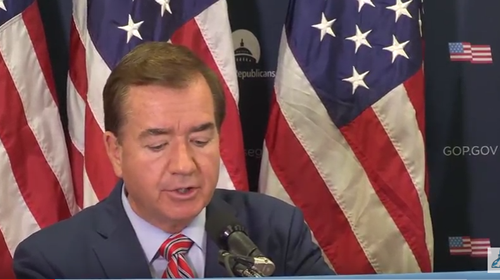
US Foreign Affairs Committee, 25 July 2017 - On Tuesday, at the House Republican leadership’s press conference, Chairman Royce spoke about why the House will vote Tuesday on H.R. 3364, the Countering America’s Adversaries Through Sanctions Act. Below are the video and transcript of his remarks.

US House passes Iran-Russia sanctions deal

House passes sweeping sanctions bill on Iran and Russia


The Hill, July 25, 2017 - The GOP-controlled House easily passed bipartisan legislation on Tuesday to limit the Trump administration’s ability to lift sanctions on Russia. 
Three Republicans --Reps. Justin Amash (Mich.), Jimmy Duncan (Tenn.) and Thomas Massie (Ky.) -- voted against the bill, which passed 419-3.
“This strong oversight is necessary. It is appropriate. After all, it is Congress that the Constitution empowers to regulate commerce with foreign nations,” House Foreign Affairs Committee Chairman Ed Royce (R-Calif.) said. 
Trump expressed a desire to mend relations with Russia during the 2016 campaign, and is reportedly considering restoring Russian access to two diplomatic compounds in New York and Maryland that the Obama administration seized last year as punishment for the country’s election meddling. 
The House is scheduled to depart Washington for the August recess at the end of this week, meaning the sanctions package will likely be its biggest legislative accomplishment to date.
The GOP-controlled Congress has not been able to send bills fulfilling major campaign pledges such as repealing the healthcare law and reforming the tax code to Trump's desk thus far.
The bill establishes new sanctions on Iran and North Korea, in addition to Russia. 
Under the House-passed bill, existing sanctions on Russia for its aggression in Ukraine and interference in the 2016 election would be codified into law. New sanctions would go into effect against Iran for its ballistic missile development, while North Korea’s shipping industry and people who use slave labor would be targeted amid the isolated nation’s efforts to launch an intercontinental ballistic missile (ICBM).
The sanctions legislation has been stalled in the House since the Senate passed the legislation by a 98-2 vote last month.
The first snag came from House lawmakers who noted that the Senate bill violated the constitutional requirement that all revenue-raising measures originate in the lower chamber. 
Rep. Eliot Engel (D-N.Y.), the top Democrat on the House Foreign Affairs Committee is supportive of the sanctions package, but expressed concern that it might not have a smooth path to passage in the Senate.
“It seems we may be on the floor before we ironed out all our differences with the other body,” Engel said, citing the late addition of North Korea sanctions. “I hope we don’t face further delays when this bill gets back to the other house.”